Introduction
Kitchen furniture in India faces:
● Steamexposure
● Oil & heat
● Water spills
● Humidity
Choosing between BWP plywood and BWR plywood directly affects durability.
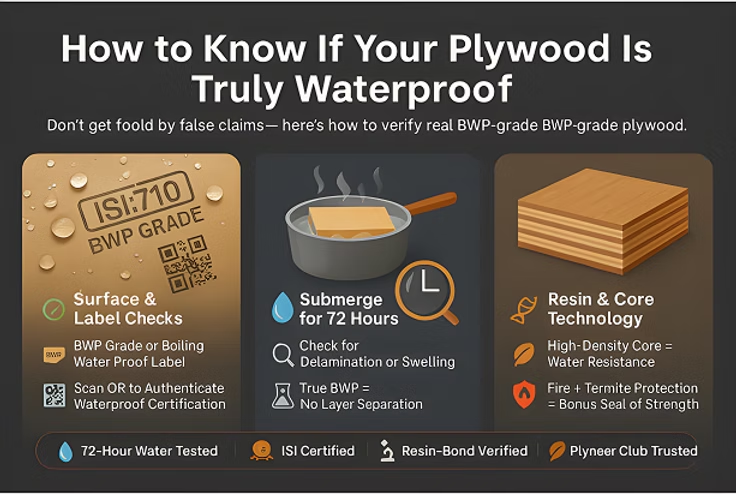
BWP (Boiling Water Proof) plywood is designed to:
● Withstand prolonged water exposure
● Resist moisture penetration
● Maintain structural bonding Ideal for:
● Sink cabinets
● Wet kitchen zones
● Bathroom cabinets
BWR (Boiling Water Resistant) plywood offers:
● Moderate water resistance
● Indoor usage durability
● Budget-friendly option Suitable for:
● Wardrobes
● Study tables
● Dry interior cabinets
Detailed Comparison Table
| Feature | BWP | BWR |
|---|---|---|
| Water Resistance | Very High | Moderate |
| Sink Area Suitability | Recommended | Not Ideal |
| Price | Higher | Lower |
| Lifespan in Kitchen | Longer | Moderate |
Visual Moisture Impact
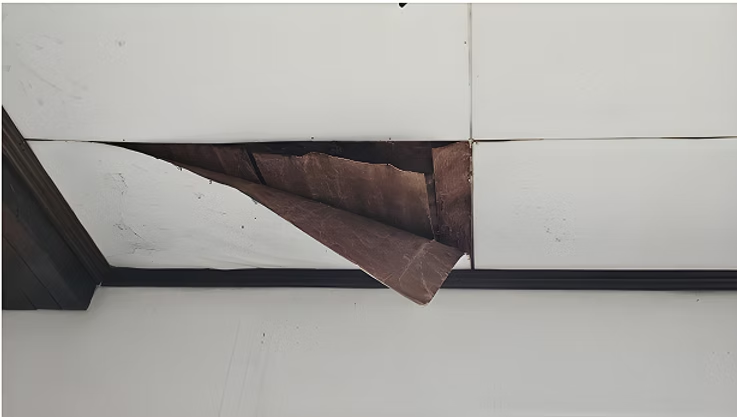

Poor plywood choice can cause:
● Swelling
● Edge bubbling
● Laminate peeling
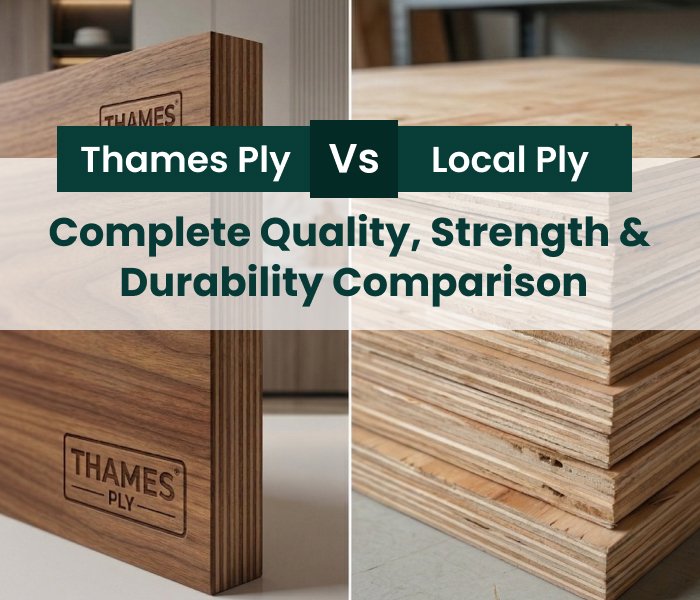
Thames Ply BWP focuses on:
● High bonding strength
● Calibrated thickness
● Treated core
● Stable performance in humid conditions
Kitchen Recommendation Summary
For Indian kitchens:
● Wet areas → BWP
● Dry upper cabinets → BWR
When comparing BWP vs BWR plywood for Indian kitchens, the right choice depends on moisture exposure, usage intensity, and durability expectations. Investing in high-quality waterproof plywood ensures better performance, reduced maintenance, and longer furniture life.